Chalk and Skin Care for Climbers
Your skin is the one piece of gear you can never replace, and it is the thing actually touching the rock. A little care keeps it tough, grippy and pain free, so you climb more and rest less. Here is how to use chalk well and look after your hands.
Get the weekly climbing briefing
One curated email a week with the climbing news, sends and gear worth your time.
Free. Weekly. Unsubscribe anytime.
What chalk actually does
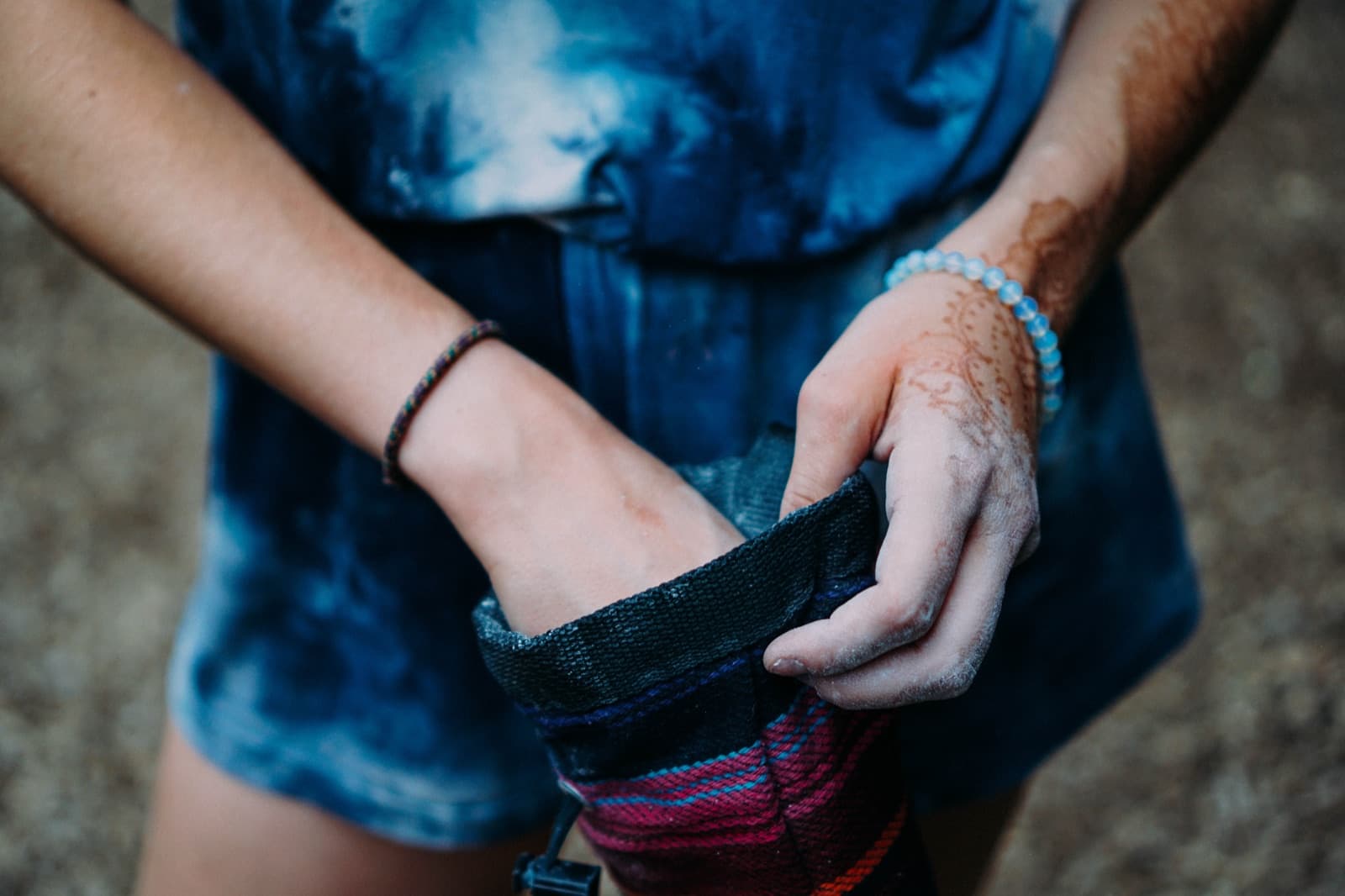
Chalk is magnesium carbonate, the same white powder gymnasts and weightlifters use. It dries the sweat off your fingertips so your skin can grip the rock or the hold instead of sliding on a thin film of moisture. It does not make you stronger, but on a sweaty day it is the difference between sticking and slipping.
Use less than you think
More chalk is not better. A light, even coating is all you need. Caked on chalk actually reduces friction and leaves ugly white tick marks all over the wall. A chalk ball inside your chalk bag keeps the amount sensible and the mess down, and many gyms now ask for chalk balls or liquid chalk to keep the air clear.
Liquid chalk and when to use it
Liquid chalk is chalk suspended in alcohol that you rub on and let dry into a thin base layer. It lasts longer, makes almost no dust, and is handy indoors or as a base under normal chalk on a hard redpoint. Some climbers use it on its own, others as a first layer and then top up with loose chalk.
Looking after your skin
Climbing slowly builds up the tough skin that lets you hold small edges, but push too hard and it splits or tears. The goal is skin that is firm and dry, not thin and shiny or thick and cracked.
- Stop before a hot spot becomes a torn flapper. Skin heals slower than muscle.
- File thick or uneven callus down flat so it does not catch and rip.
- Wash the chalk off after climbing and use a little balm to stop cracking.
- On multi day trips, treat your skin as a resource and manage how much you climb.
Fixing damaged skin
If you do tear a flap, trim the loose skin, clean it, and tape it if you need to keep climbing. A dedicated climbing salve overnight speeds up healing. Mostly, though, the fix is patience: give raw skin a day or two and it comes back tougher.
Strong skin and smart chalk use quietly add up to a lot more climbing. For the rest of your kit, see our gear checklist, and the Climbers Delight newsletter keeps the good advice coming every week.
Enjoyed this guide? Get the weekly briefing.
One curated email a week with the climbing news, sends and gear worth your time.
Free. Weekly. Unsubscribe anytime.