How to Choose Your First Climbing Shoes
Climbing shoes are the one piece of gear that changes how you climb the moment you put them on. The good news is that your first pair does not need to be fancy. It needs to fit.
Get the weekly climbing briefing
One curated email a week with the climbing news, sends and gear worth your time.
Free. Weekly. Unsubscribe anytime.
Why shoes matter so much
Good shoes let you trust your feet. A snug, well shaped shoe puts your weight onto small holds and lets you stand on edges you would slide straight off in everyday shoes. That is why experienced climbers fuss over fit so much, and why a beginner in the right shoe often climbs better overnight.
Fit comes first
A climbing shoe should feel snug all around your foot with no dead space, especially at the heel and toe, but it should not cause real pain. Your toes can be gently curled, not crushed. Many people size climbing shoes a little smaller than their street shoes, but modern shoes stretch and break in, so do not chase a painful fit in the belief that suffering makes you a better climber. It does not.
Try shoes on late in the day when your feet are slightly larger, and wear them for a few minutes in the shop to feel where they press.
Rental shoes can tell you more than you think. Most gyms only stock them in whole sizes, so if one size feels loose and the next size down already hurts, your size is probably the half size in between. Take that to the shop as your starting point.
Toe shape matters as much as length. If your second toe is longer than your big toe, check where the pressure sits: when the second toe is pushed hard against the front while the big toe still has room, the shape is wrong for your foot, and breaking the shoe in will not fix that. Try a different model rather than a different size.
Understanding shoe shape
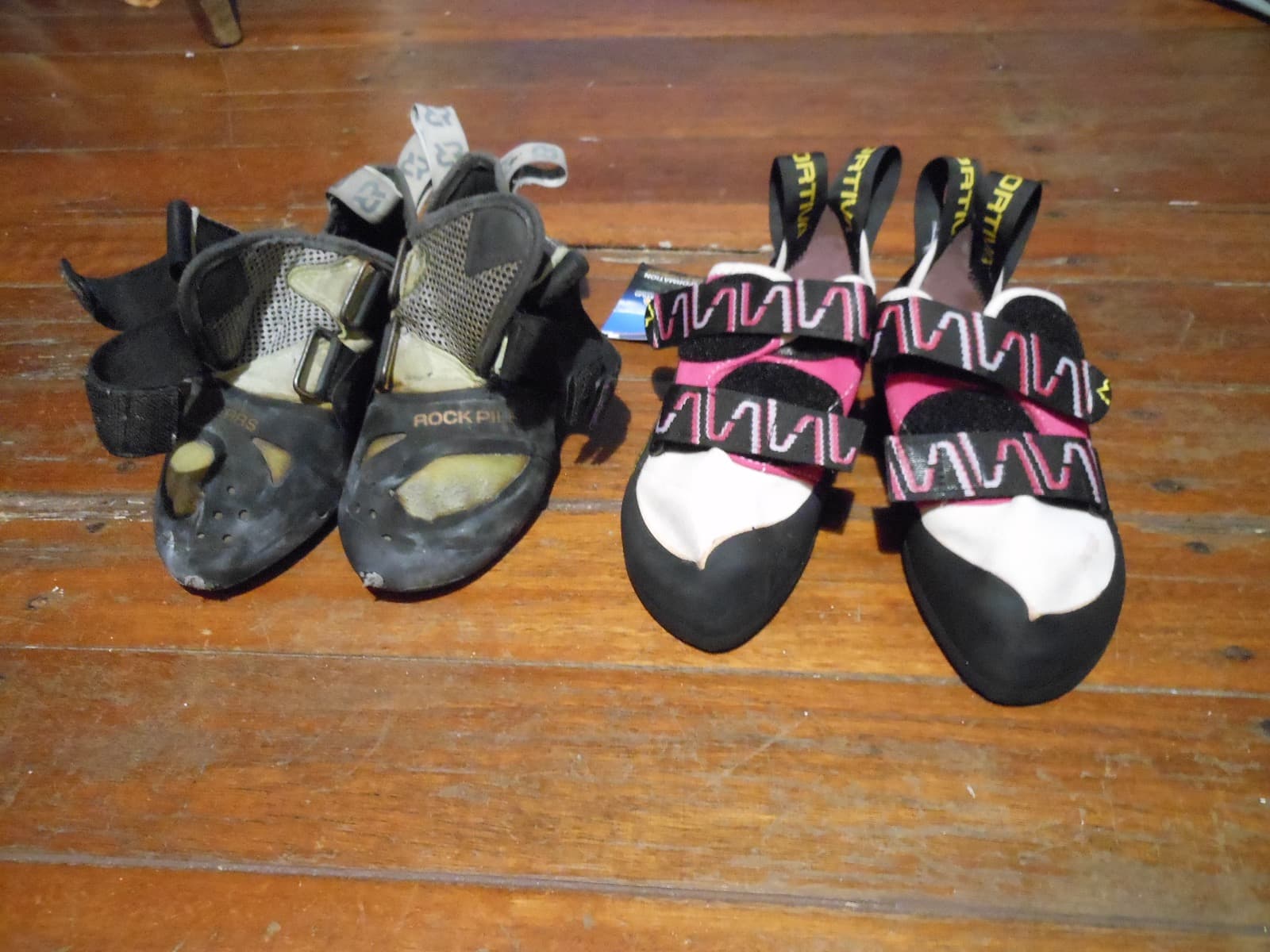
Climbing shoes come in three broad shapes. A neutral, flat shoe is the most comfortable and is ideal for a first pair and for long days. A moderate, slightly curved shoe is a versatile all rounder. An aggressive, strongly downturned shoe drives power into your toes for steep, overhanging climbing, but it is uncomfortable and wasted on a beginner.
For your first pair, choose neutral or moderate. Save the aggressive shoes for when your climbing actually demands them. And whether you end up sport climbing or on trad, one comfortable pair covers both at the start, our guide to trad vs sport climbing explains how the two disciplines differ.
Velcro, laces or slippers
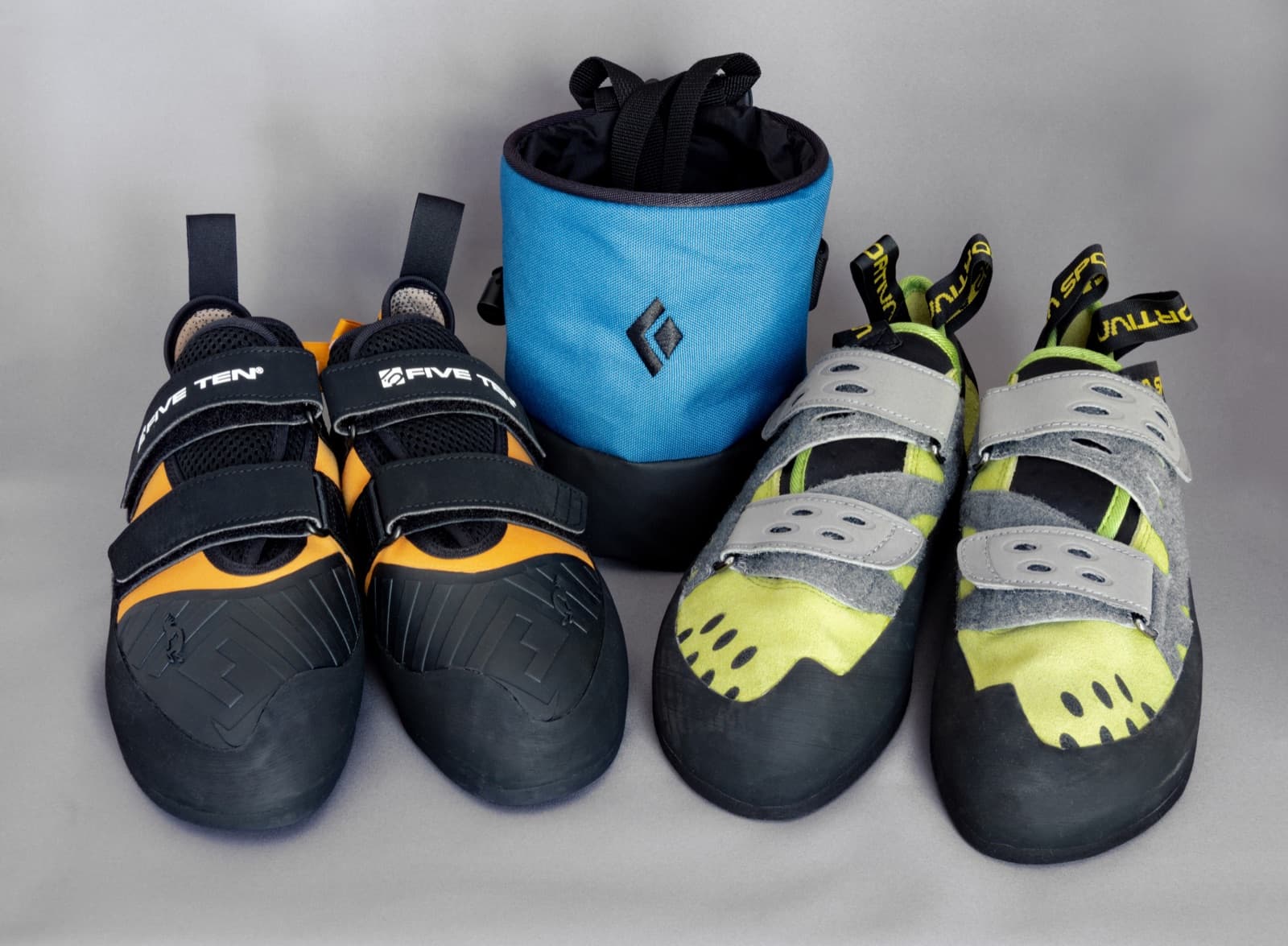
- Velcro straps are quick to pull on and off, which is perfect for bouldering where you take your shoes off between attempts.
- Laces give the most adjustable fit and suit longer routes and all day wear.
- Slip on shoes are simple and sensitive but offer the least adjustment.
For a first pair at the gym, a comfortable Velcro shoe is hard to beat.
Caring for your shoes
- Let them air out after every session so they last longer and smell better.
- Keep them out of hot cars and direct sun, which breaks down the rubber.
- Resole them when the toe wears thin rather than buying a whole new pair, which is cheaper than you might think.
Once your shoes fit and you trust your feet, the rest of climbing gets a lot more fun. For more starting points, read our guide to bouldering for beginners, and subscribe to the Climbers Delight newsletter for gear notes and stories every week.
Enjoyed this guide? Get the weekly briefing.
One curated email a week with the climbing news, sends and gear worth your time.
Free. Weekly. Unsubscribe anytime.