Trad vs Sport Climbing: What's the Difference?
Trad and sport climbing look almost identical from the ground. Same rope, same harness, same idea of leading up a wall with a partner belaying. The difference comes down to one thing: where the protection comes from. Once that clicks, everything else about them makes sense.
Get the weekly climbing briefing
One curated email a week with the climbing news, sends and gear worth your time.
Free. Weekly. Unsubscribe anytime.
The short answer
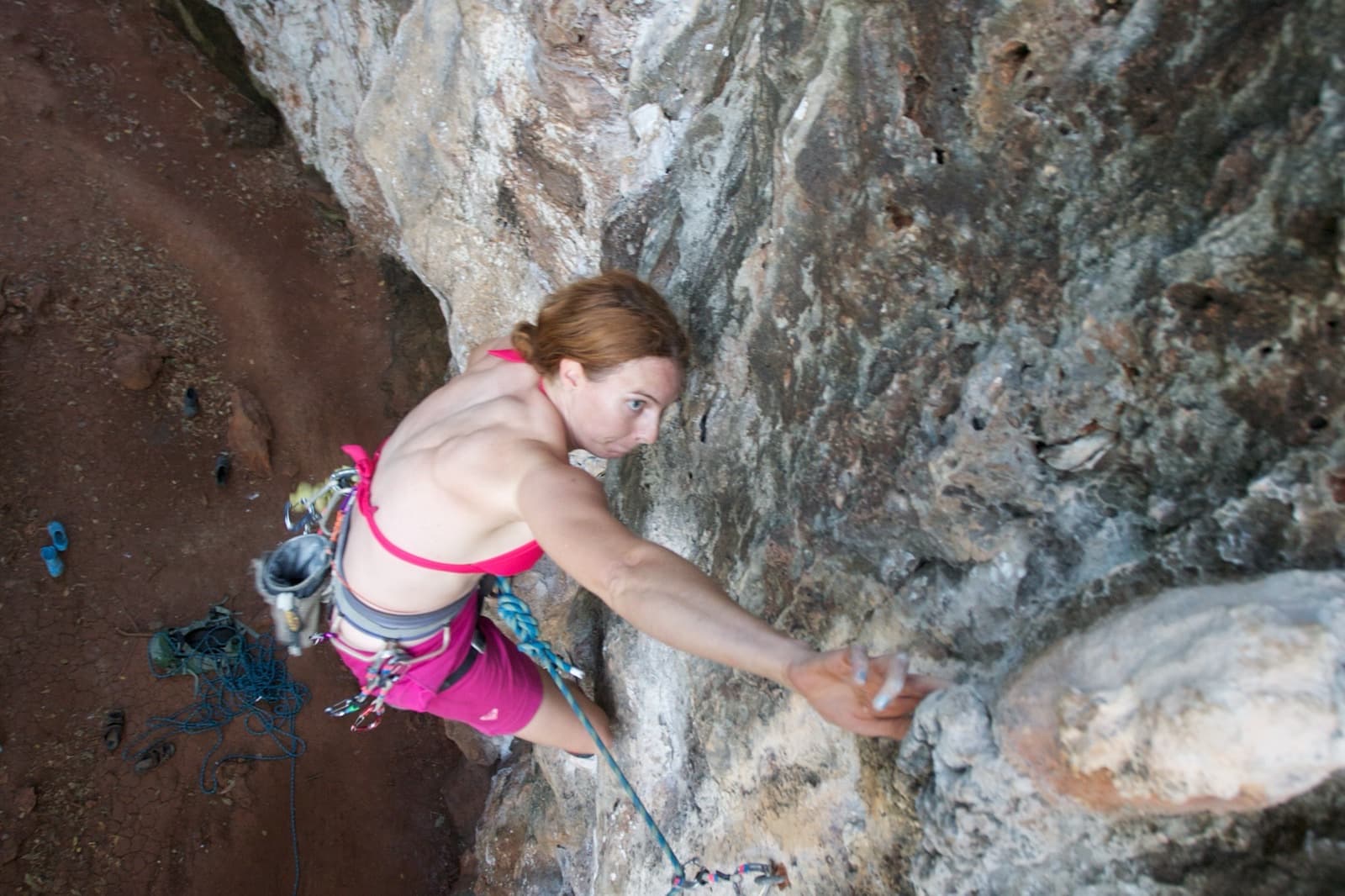
In sport climbing the protection is already there. You clip your rope into bolts that are permanently fixed into the rock. In trad climbing, short for traditional, you carry your own protection and slot it into cracks as you climb, then your partner takes it out again on the way up. Sport is clip what is already there. Trad is build your own as you go.
What sport climbing is
On a sport route, someone has already drilled bolts into the wall at regular intervals. You lead up with the rope, clipping a quickdraw onto each bolt and the rope through it as you pass. If you fall, the last bolt holds you. Because the protection is fixed and dependable, sport climbing lets you focus on the movement and push yourself physically, with very little gear to manage.
What trad climbing is
On a trad route there are no bolts. You carry a rack of removable protection, mostly cams and nuts, and you place it into cracks and pockets as you climb to protect a fall. Your partner cleans the gear back out as they follow, so nothing stays in the rock. Trad opens up huge natural lines that were never bolted, but it asks you to judge your own protection, which is a real skill in itself.
The differences that actually matter
- Protection: sport uses fixed bolts, trad uses gear you place and remove yourself.
- Gear and cost: sport needs a rope, a set of quickdraws and a harness. Trad adds a full rack of cams and nuts, which is a bigger investment and a lot more to learn.
- Risk: on well bolted sport routes the protection is reliable. On trad your safety depends on the gear you place, so the skill and the mental demands are higher.
- Where you can climb: sport is limited to bolted crags, trad opens up cracks and remote lines that nobody has bolted.
- Mindset: sport rewards trying hard and falling off, trad rewards control, judgment and staying calm.
Do you need different gear or shoes?
The hardware is where trad and sport really split. Sport needs a rope, a set of quickdraws and a harness, and not much else. Trad adds a full rack of cams and nuts, plus slings and carabiners to build and extend placements, which is a bigger outlay and a lot more to learn to use safely. Shoes, though, are not the dividing line. Sport climbers often favour a more aggressive, sensitive shoe for steep bolted routes, while long trad and crack routes reward a flatter, stiffer, more comfortable shoe you can stand in all day and jam into cracks. As a beginner you do not need two pairs: one comfortable all round shoe does both, and our guide to choosing your first climbing shoes covers what to look for.
So which is harder, and which is riskier?
Harder and riskier are not the same question. On grades, both disciplines share the same technical number, a French grade or a YDS number, so a 6a is a 6a either way. Physically, the hardest sport routes in the world are harder than the hardest trad routes, because you can throw everything at the movement without also managing gear. But trad adds a layer the number alone does not show: how well the route protects and how committing it feels. In Britain that seriousness even gets its own adjectival grade, like HS or E1, next to the technical one, which is why a moderate trad route can feel far more serious than a sport route of the same number. To understand how the numbers themselves line up, our guide on how climbing grades work breaks it down.
Which should you start with?
For almost everyone, sport climbing, and top roping before that. It lets you learn to move, to lead and to fall in a setting where the protection is dependable, so you build confidence without also having to judge your own gear. Trad is best added later, ideally with a mentor or a proper course, once leading on bolts feels natural and you know what good protection looks like. There is no rush, and skipping the sport stage to jump straight onto trad is how people end up in over their heads.
If you are still getting the lay of the land, start with types of climbing explained for the big picture, make sure you have the essential gear, and get comfortable belaying before you lead anything. And the Climbers Delight newsletter is a good way to keep learning as you move from clipping bolts toward placing your own.
Enjoyed this guide? Get the weekly briefing.
One curated email a week with the climbing news, sends and gear worth your time.
Free. Weekly. Unsubscribe anytime.