How to Overcome the Fear of Falling in Climbing
Almost every climber meets the fear of falling sooner or later. It is normal, it is useful, and it does not have to run your climbing. With safe, gradual practice you can teach your body that falling is usually fine, and climb far more freely for it.
Get the weekly climbing briefing
One curated email a week with the climbing news, sends and gear worth your time.
Free. Weekly. Unsubscribe anytime.
Fear is normal, and even useful
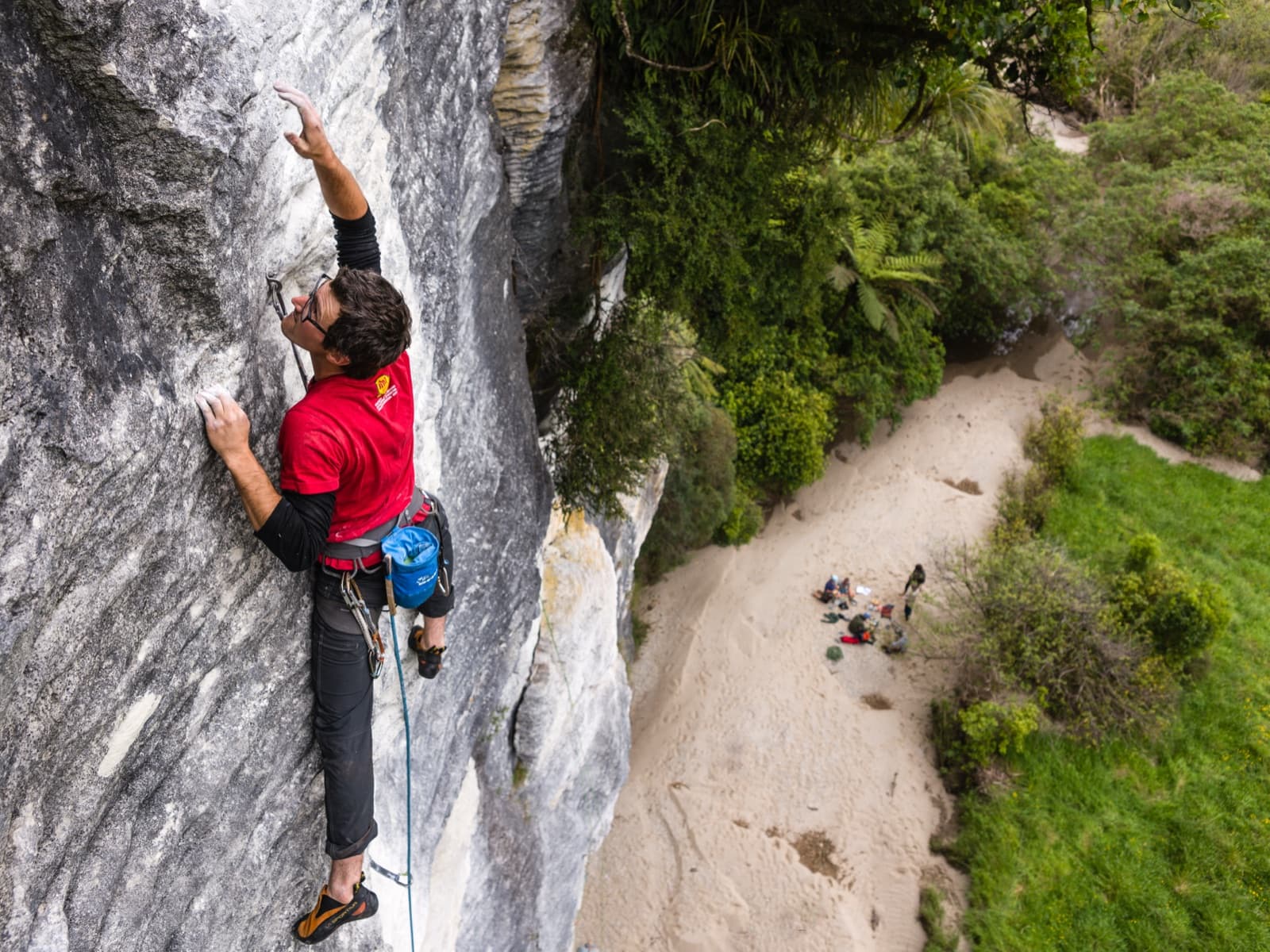
The fear of falling is your brain doing its job. It keeps you careful in places where care matters. The problem is when it fires on safe falls too, freezing you up, making you overgrip and cutting your climbing short. The goal is not to remove the fear, but to right size it, so it speaks up when a fall is dangerous and stays quiet when it is not.
Know when a fall is actually safe
Most falls in a gym or on a well bolted sport route are safe, as long as the system is sound. Before you push yourself, make sure your knot and your belayer are solid, that the fall is clean with nothing to hit, and that you are above good protection. Understanding the setup is half the battle. If any of that is unfamiliar, learn it properly first in our guide on how to belay.
Practise falling on purpose
The single best cure is controlled practice. With a trusted belayer and a safe, overhanging wall, take small falls on purpose and work up slowly. Start by letting go just above a clip, then a little higher, then a little higher again. Each safe fall teaches your body what it needs to feel: that the rope catches you and nothing bad happens.
A gentle progression
- Begin on top rope, where falls are tiny, and get comfortable weighting the rope.
- Move to small lead falls just above the clip, with a calm, attentive belayer.
- Increase the distance gradually, only when the last step feels boring rather than scary.
- Never practise falls where you could hit a ledge, the ground or the wall on the way down.
Calm the body, calm the mind
- Breathe slowly and deliberately. Held breath feeds panic.
- Keep moving rather than freezing. Hesitation makes fear grow.
- Trust your feet and your belayer, and commit to the move instead of hovering.
- Go at your own pace. Progress that feels manageable sticks, while forcing it does not.
Be patient with yourself
Fear of falling fades slowly and can come back on a bad day, and that is completely normal. Treat it as a skill you practise, not a flaw to fix overnight. Little by little, safe falls add up and your climbing opens right up. For where roped climbing can take you next, see our guide to the types of climbing, and let the Climbers Delight newsletter keep you inspired along the way.
Enjoyed this guide? Get the weekly briefing.
One curated email a week with the climbing news, sends and gear worth your time.
Free. Weekly. Unsubscribe anytime.